Ophthalmology · Zurich

Clear guidance on lens and laser — grounded in active research.

By your Side. For your Sight.

Priv.-Doz. Dr. med. Jascha Armin Wendelstein · Ophthalmologist · surgical focus: refractive & cataract surgery.

Request a consultation Zurich · by e-mail
Priv.-Doz. Dr. med. Jascha Wendelstein, Ophthalmologist
Ophthalmologist · Priv.-Doz. (Habilitation) · 120+ publications (PubMed) · International research collaborations (10 countries) · IOL Power Club member
Are you in the right place?
You are considering lens surgery for a cataract.
You want to rely less on glasses or contact lenses, by laser or lens.
You are looking for a second opinion on lens, laser, ICL or keratoconus.
Focus areas

What I focus on — explained clearly.

Procedures and guidance around the lens and the cornea. A first orientation here; in the consultation we discuss what makes sense in your situation.

01

Cataract — lens surgery

Surgery for the clouded natural lens (cataract) and selecting the right artificial lens for your daily life. The surgery can be performed manually or femtosecond laser-assisted (FLACS) — honestly assessed.

02

Lens calculation & selection

Precise measurement and calculation of lens power — a research focus of mine that co-determines the later visual result.

03

ICL — implantable contact lens

An additional lens placed into the eye that keeps your own lens — an option in its own right, not only when laser isn't suitable. → More on the ICL

04

Keratoconus

Assessment and treatment of the progressive corneal deformation, from cross-linking to further surgical care. → More on keratoconus

05

Refractive corneal laser

Correcting short-sightedness, long-sightedness and astigmatism to become more independent of glasses and contact lenses in daily life. → Methods in detail

06

Therapeutic corneal laser

Laser-assisted treatment of pathological corneal changes — not for correction, but for therapy.

Orientation

Which paths might suit me?

Three short questions give a first orientation as to which correction paths might generally play a role for a profile like yours — not an eligibility check and not a diagnosis. Which path, or whether any at all, only an examination can decide.

3 questions · about 30 seconds · please don\'t enter health data.
How do you see without glasses or contact lenses?
Choose what fits best.
Do you have astigmatism (cylinder)?
Often shown on your prescription under „cyl.“ — if you\'re unsure, that\'s perfectly fine.
Which age group are you in?
Age influences which paths make sense at all.
Your orientation

General information, not individual medical advice and not a confirmation of eligibility. Whether and which path fits depends on measurements such as corneal thickness and shape, the degree of refractive error, the anterior chamber depth, your ocular surface and further findings, and is clarified in an examination.

Decision help

Which option fits me? — common questions, clearly answered.

The answers show what matters in the decision, not what you "must" do. The specifics we clarify together in the consultation.

Getting rid of glasses, laser or lens?+
Both correct refractive errors but suit different starting points. Which path makes sense depends on factors such as age and presbyopia, the degree of the refractive error, the cornea and the state of your own lens. We go through these together in the consultation.
Standard or premium lens for cataract surgery?+
A standard lens focuses at one distance; premium lenses can cover several distances or an astigmatism, but with trade-offs, such as light effects at night. What fits depends on your daily life, your eyes and your tolerance for compromise, not on the price. Which models perform how, and for whom, is part of my research, that experience feeds directly into the recommendation.
When is a cataract "ripe" for surgery?+
Today you do not have to wait until the cataract is "ripe". What matters is how much the clouding limits your vision and daily life, not the lens finding alone.
Reading glasses after 45, what are the options?+
With presbyopia, focusing up close declines. Depending on your situation, several routes are possible, from special lenses to laser procedures. Which option is realistic we clarify based on your eyes and your visual priorities.
Why a different lens than someone with "the same" eyes?+
The choice and calculation of the artificial lens rest on a precise measurement of the individual eye, not on the glasses prescription alone. Even small differences in the measurements lead to different recommendations. This calculation is a focus of my research.
Dry eyes, can I still have laser?+
Dry eyes do not automatically rule out laser treatment, but they are an important factor for suitability and outcome. That is why assessing the ocular surface is part of any serious work-up before laser. If laser is not ideal, lens-based options, such as the ICL or lens surgery, are an alternative that does not stress the corneal surface in the same way and, depending on the findings, can be the more suitable choice. Ask a question →
What happens at the first consultation?+
We clarify your visual goals and your current glasses or contact-lens situation and discuss which examinations make sense. The aim at first is not a quick decision for a procedure, but a realistic assessment of your options. Request an appointment →

General information, it does not replace individual medical advice.

Why me

Guidance that comes from research — not just routine.

I actively contribute to the research on how the visual result after lens surgery can be predicted more accurately, and which lens models suit whom best, and translate that knowledge into guidance you can understand.

This helps most with questions where standard answers often fall short: premium lenses, ICL, laser suitability, keratoconus, or lens-power calculation after unusual corneal findings.

Clinical and academic positions incl.: Kepler University Hospital (Linz) · LMU Munich · IROC Zurich · YouSee (Zurich · Bern · Basel) · Saarland University (Homburg).

→ All publications & research focus

→ Selected talks, interviews & media

Over 120 peer-reviewed publications

Focus areas: lens-power calculation, refractive and corneal surgery. Over 1,000 citations, listed on PubMed.

Appointed member of the IOL Power Club

International specialist circle in the science of lens-power calculation (IOL power), precisely my research focus.

Award-winning research

Multiple awards, including the ESCRS Peter Barry Fellowship and the SwissOphthAward.

Contributor to the AAO's BCSC

Member of the Textbook Revision Committee, Section 03 (Clinical Optics & Vision Rehabilitation) of the Basic and Clinical Science Course of the American Academy of Ophthalmology, the standard reference for US and European (EBO) board training.

International talks & collaborations

Research partners and talks in, among others, the USA, Singapore, Australia, Germany, Austria, France, Italy, Poland, India and South Korea.

Priv.-Doz., academic teaching qualification

Habilitation as the basis for teaching and independent research.

Interactive

Lens focus — experience the trade-offs yourself.

Choose a lens concept and see, schematically, which distances become sharp, and what compromise each solution brings.

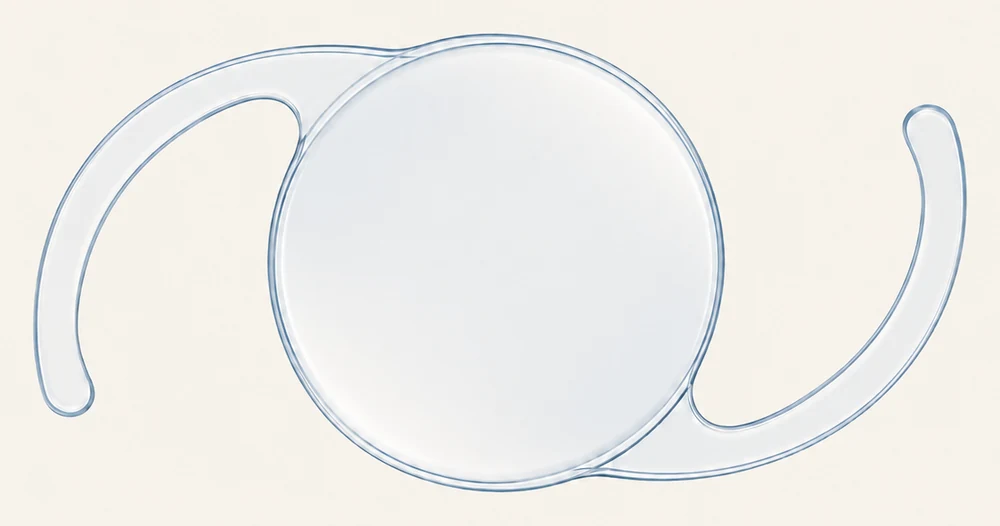
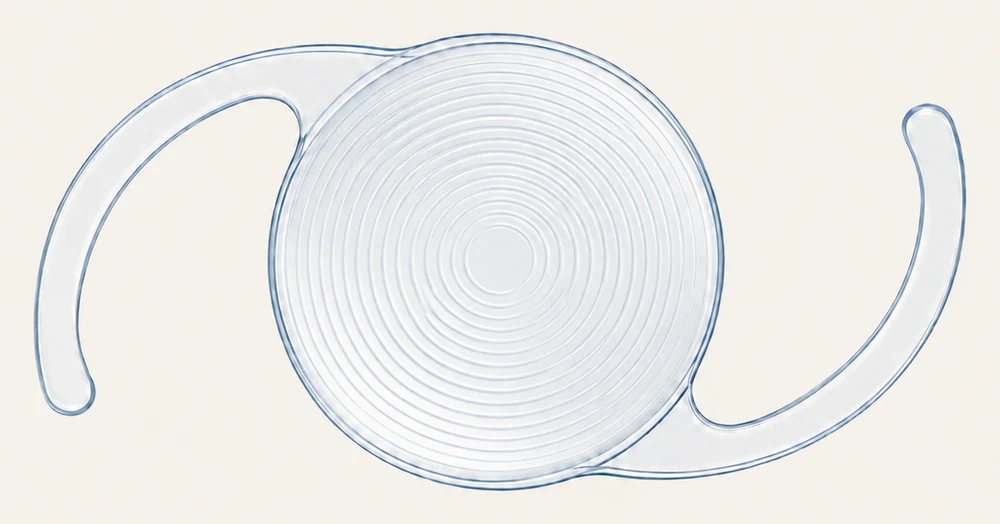
This is what an intraocular lens (IOL) looks like, schematically, diffractive models carry fine rings that split light across several distances.

Monofocal IOLSmooth optic, one main distance in focus.
Multifocal IOL (diffractive rings)Concentric rings split light across several distances.
Near · Book, smartphone
Even small print stays clearly legible, when reading or on your phone.
Intermediate · Laptop, dashboard
Laptop & cockpit
Far · Road sign, landscape
ZÜRICH 5

Schematic illustration, not an individual prediction. Actual vision depends on the eye, measurements, lens type, pupil, retina and neuroadaptation, and can differ considerably from person to person.

Contact

Request a consultation

Would you like to discuss your situation, from lens surgery to whether laser is an option for you? Just send me a short e-mail.

Location: Zurich, Switzerland Consultations: by appointment

Appointment or question

A short, general message is enough. We discuss medical details securely in person.

Request a consultation